
- Career
25. February 2025

Table of Contents
Table of Contents
What requirements will trade fair construction face in the future, and how can we prepare the next generation for this?
With advancing digitalization and a growing focus on sustainable solutions, the trade fair construction industry is facing constant change. At the same time, there is increasing demand for creative, technically skilled professionals who are able to meet these requirements. But how can we best support the next generation of trade show construction professionals so that they can master the challenges facing the industry?
In this article, you will learn about the new requirements of exhibition stand construction in the future and which approaches to talent development are already proving successful in practice. From the close integration of theory and practice to supportive learning environments and strong partnerships with educational institutions, here you will gain insights into how the next generation can be prepared for the challenges of the industry.
Theory and practice: Preparing young talents for the world of work
Traditional academic / university education programs often focus on theoretical knowledge before practical experience is gained. But is this the most efficient and sustainable approach, especially considering that the trade show construction industry is heavily based on experience?
More and more companies and educational institutions are placing emphasis on combining theory and practice. Trainees and students are involved in real projects from the outset and take on responsibility at an early stage.
This dual approach has also proven successful for us: young talents not only learn the theoretical basics in their respective fields, but also experience the processes and challenges of trade show construction firsthand. Whether it’s project planning, design or construction of a exhibition stand, the direct practical relevance promotes a deeper understanding of how the industry works and accelerates professional and personal development.
Learning through experience: How do we create a supportive learning environment?
People learn best through experience, and this also applies to the trade show construction industry. But how can we create an environment in which they can try out things without fear, despite the enormous time pressure and the often “zero tolerance for errors” during the final execution on site?
We are certain that an open and supportive learning environment is crucial. In many companies, it is now common practice for experienced professionals to act as mentors and closely accompany new employees as they take their first steps in their careers. Great importance is attached to viewing mistakes as valuable learning opportunities. Appropriate control mechanisms must be introduced to ensure that mistakes made by young professionals in real projects do not have a negative impact on the project and customers.
Through continuous feedback and close supervision, strengths can be better identified and developed in a targeted manner. This ensures both professional and personal growth and the ability to take on responsibility at an early stage.

Laura is a good example of a young professional who has successfully joined MMD. Although she completed her training as a technical product designer in classic mechanical engineering, she switched to trade fair construction and quickly found her feet in her new environment. Thanks to a consistent “training on the job” approach, she was involved in real projects at an early stage and independently took on the coordination of the booth handover in Vienna, Salzburg and Stockholm. This practical training enabled her to quickly find her feet in the industry and take on responsibility.
Neele, a media design student at DHBW Ravensburg, was also able to gain valuable practical experience at MMD early on. In her fifth semester, she worked closely with the project team to redesign and further develop the exhibition stand of the renowned tire manufacturer PIRELLI for the “TIRE” in Cologne. In doing so, she experienced first-hand how theory and practice intertwine in trade fair construction and how practice-oriented work promotes professional and personal development. The result: an impressive media installation in the form of a four-meter-long LED tunnel.

Such projects demonstrate how important early involvement in real work processes is for promoting optimal development. By gaining insight into the entire project cycle – from the initial creative idea to the final implementation –, young professionals learn how important it is to plan in detail and respond flexibly to unforeseen challenges. They experience the dynamics of trade fair construction firsthand and have the opportunity to see their designs and ideas not only on paper, but also in reality.
Collaboration with educational institutions: How do we promote young talent through strong partnerships?
Close cooperation between companies and educational institutions such as universities and vocational schools is essential for promoting young talent in trade fair construction. Dual study programs and practical training courses make it possible to combine theoretical knowledge with practical experience.
MMD has been working successfully for many years with the Duale Hochschule Baden-Württemberg (DHBW) in Ravensburg, particularly in the areas of media design and trade fair, congress and event management. Students are given the opportunity to complete their dual studies in a practice-oriented environment and gain valuable insights into the work processes of the trade fair industry.
Similar partnerships also exist with the Rosenheim Technical University, which integrates students from the fields of interior design and wood technology into the company. These partnerships not only offer students valuable practical experience, but also enable companies to identify and promote talent at an early stage.
Challenges in promoting young talent
The search for suitable young talent is a constant challenge for companies. One of the main reasons for this is the wide range of study and training opportunities available to young people.
In recent years, the educational landscape has become highly diversified, making it difficult for companies to stand out from the crowd. At the same time, there are challenges at the beginning of a career, such as making the right choice from the multitude of industries and occupational fields. The trade fair and event industry often does not occupy the most prominent place in the public perception, which requires additional explanation. Hardly any concert-goer or trade fair visitor can imagine the time and expertise that service providers from a wide range of trades have put into making this event possible.
Added to this are external factors such as the high cost of living in metropolitan areas, especially in the Munich region, which make it difficult to retain young talent in the long term or even attract them to the region in the first place. In many cases, the question arises as to whether the financial burden of living in a big city is in proportion to the career opportunities available.
MMD is tackling these challenges with patience and targeted measures that position the company as an attractive employer. The aim is not only to raise awareness of the industry, but also to highlight the wide range of development opportunities it offers. Through targeted information campaigns and close cooperation with universities, MMD is succeeding in getting young people excited about the exciting facets of trade fair construction and winning them over in the long term.

How do we present the trade fair industry as an attractive career option?
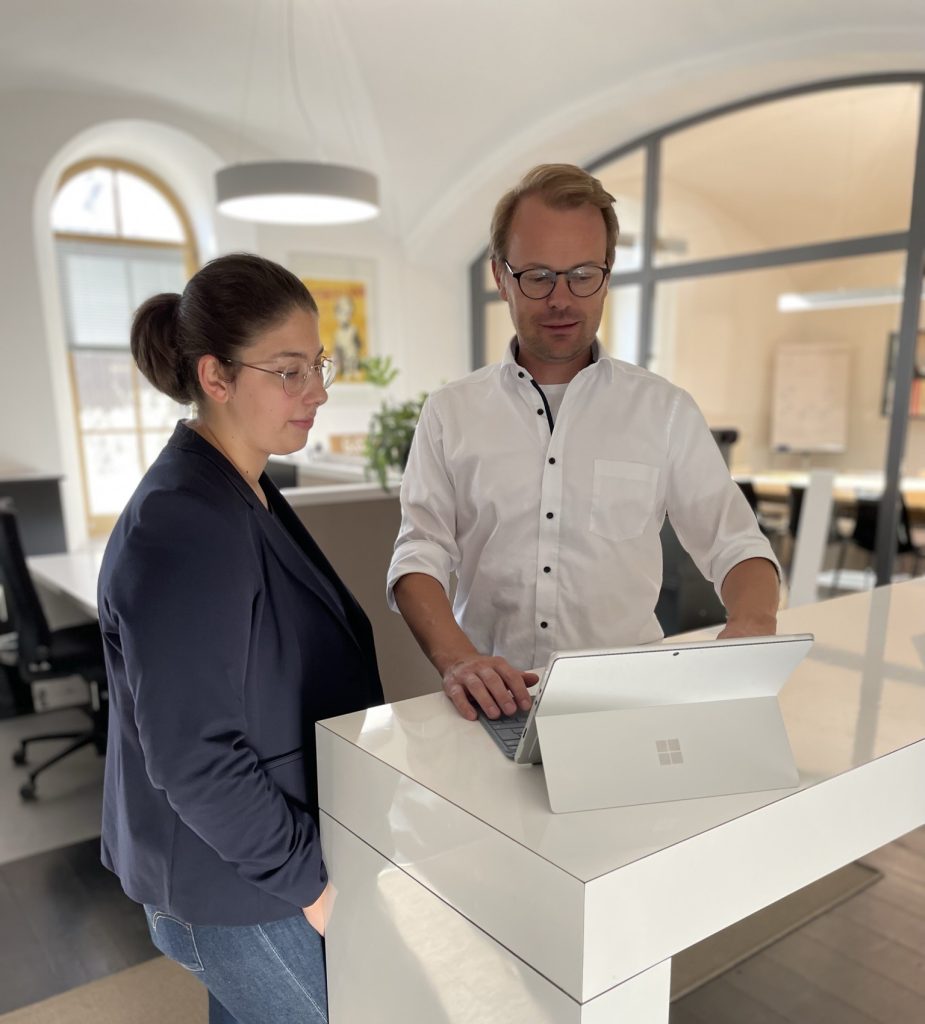
In order to attract the next generation to the trade fair industry, it is important to focus more on the exciting and varied career opportunities it offers. From technical planning and creative design to working with international clients, trade fair construction offers many opportunities for personal and professional development. With targeted information campaigns and close cooperation with schools and universities, we can spark interest in this dynamic industry and generate genuine enthusiasm. This will make trade show construction a real career tip for young talent!
Conclusion
Promoting young talent in trade show construction is a challenging task that requires practical training, close cooperation with educational institutions, and a supportive learning environment. These three approaches are particularly important in ensuring that the next generation can meet the increasing demands:
- Integration of theory and practice: The dual approach, which establishes a close connection between theoretical knowledge and practical experience, is crucial for the development of young talent in exhibition stand construction.
- Supportive learning environment: An open, error-friendly working atmosphere and support from experienced mentors promote the personal and professional development of young professionals.
- Focus on creative and technical training: In addition to traditional training, young talents should also be trained in innovative technologies and creative processes in order to master the requirements of a constantly changing, digital, and sustainable trade show construction industry.
These measures will ensure that the trade show construction industry of the future is shaped by well-trained, creative and technically skilled professionals.
Want to learn more about this topic?
Get in touch!


Contact us
More Interesting Articles
Customer Service

Customer satisfaction in trade fair construction
Exhibition Stand Design
Digital technologies in trade fair construction
Exhibition Stand Design
Efficient budget planning in trade fair construction
Trends
Trade fair construction trends 2025 | 2026
Exhibition Stand Design
Tight budget? Here’s how to minimize the costs for your exhibition stand
Sustainability
Sustainability at trade fairs: Renting plants or using artificial plants?
Back to overview