
- Trends
25. September 2025
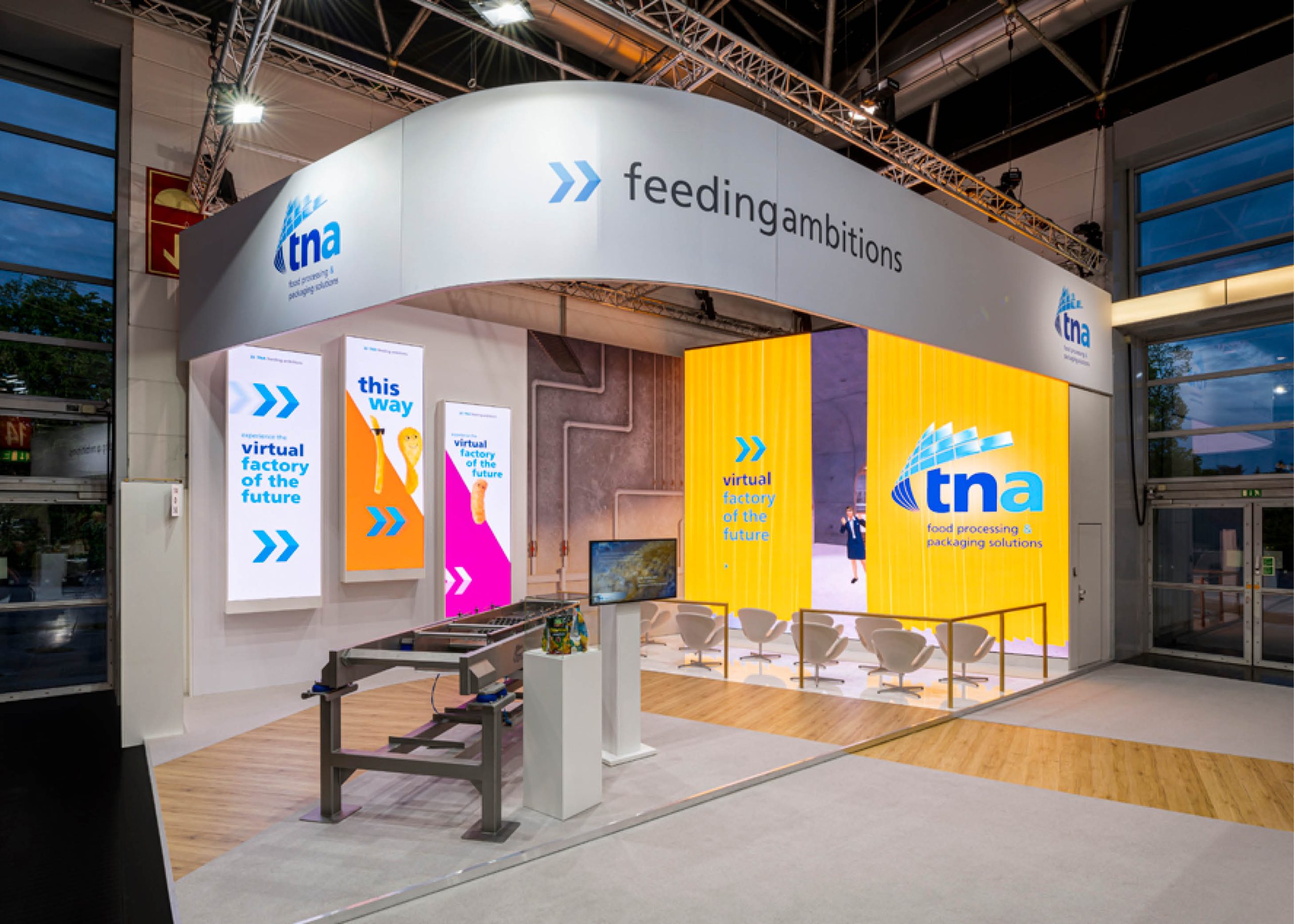
Table of Contents
Table of Contents
Between innovation & sustainability
The landscape of trade fairs is changing rapidly. What was once considered a vision of the future is now a reality in exhibition spaces everywhere, from Frankfurt to Paris, Munich and Milan. Exhibitors face the challenge of competing for attention in an increasingly tough market, at a time when sustainability is not just an nice-to-have, but an expectation of visitors.
While traditional exhibition stands often appear interchangeable, pioneers are already focusing on intelligent solutions that cleverly combine technology, environmental awareness, and visitor experience. The question is no longer whether these developments will prevail, but which trends will bring real measurable benefits and which will be short-lived fads. Six trends in trade fair construction have emerged as particularly relevant for 2025/2026:
Trend #1 | Sustainability
Trend #2 | Digital integration
Trend #3 | Modular construction methods
Trend #4 | Personalization
Trend #5 | Smart technologies
Trend #6 | Trend materials & techniques
The most important trade fair trends
Trend #1 | Sustainability
Sustainability is a term that is heard almost everywhere today. At the exhibition stand, however, it means more than just a trendy topic, because there are many opportunities here to significantly reduce the ecological footprint. These include recyclable materials, energy-efficient lighting and modular construction methods that can be used multiple times.
For companies, this is not only a plus for their image but also contributes to lower costs and responsible use of resources. Our article „Sustainability at trade fairs“ provides a practical example of how sustainability can be implemented in concrete terms, focusing on the use of plants for design and to create a pleasant indoor climate.

Trend #2 | Digital integration
Augmented reality (AR) and virtual reality (VR) are opening up entirely new dimensions. Suddenly, visitors can wander through virtual worlds, experience products in their future place of use and understand complex processes in a playful way. The technology is now so mature that even smaller exhibitors can benefit from it. Smart solutions such as IoT sensors, AI-supported visitor analyses and interactive displays also help to make trade fair appearances more efficient and exciting.


An example: For METZELER, we developed a TV studio for a series of talks called ‘Table Talk’ at a time when trade fairs had been cancelled. The solution arose from the need to maintain a presence despite the cancellation of events. The project also demonstrates how such digital formats can be used independently of trade fairs to extend a company’s presence and create lasting added value.

Trend #3 | Modular construction methods
Modular stands that can be quickly adapted to different areas or formats have long been among the most sought-after innovations in trade fair construction.
The advantage: The same booth can be used multiple times, in different sizes or with different focal points. This reduces costs and material consumption while enabling exhibitors to respond more quickly to new requirements.
Trend #4 | Personalization
In a world full of standardized messages, people long for uniqueness. This is also reflected in trade show construction. Visitors don’t want to be just part of the crowd; they want to be addressed personally. Exhibitors are responding to this with personalized content on displays, interactive tools and even product configurators that take individual needs into account. Those who manage to offer a special experience build an emotional connection and remain in memory.
Trend #5 | Smart technologies
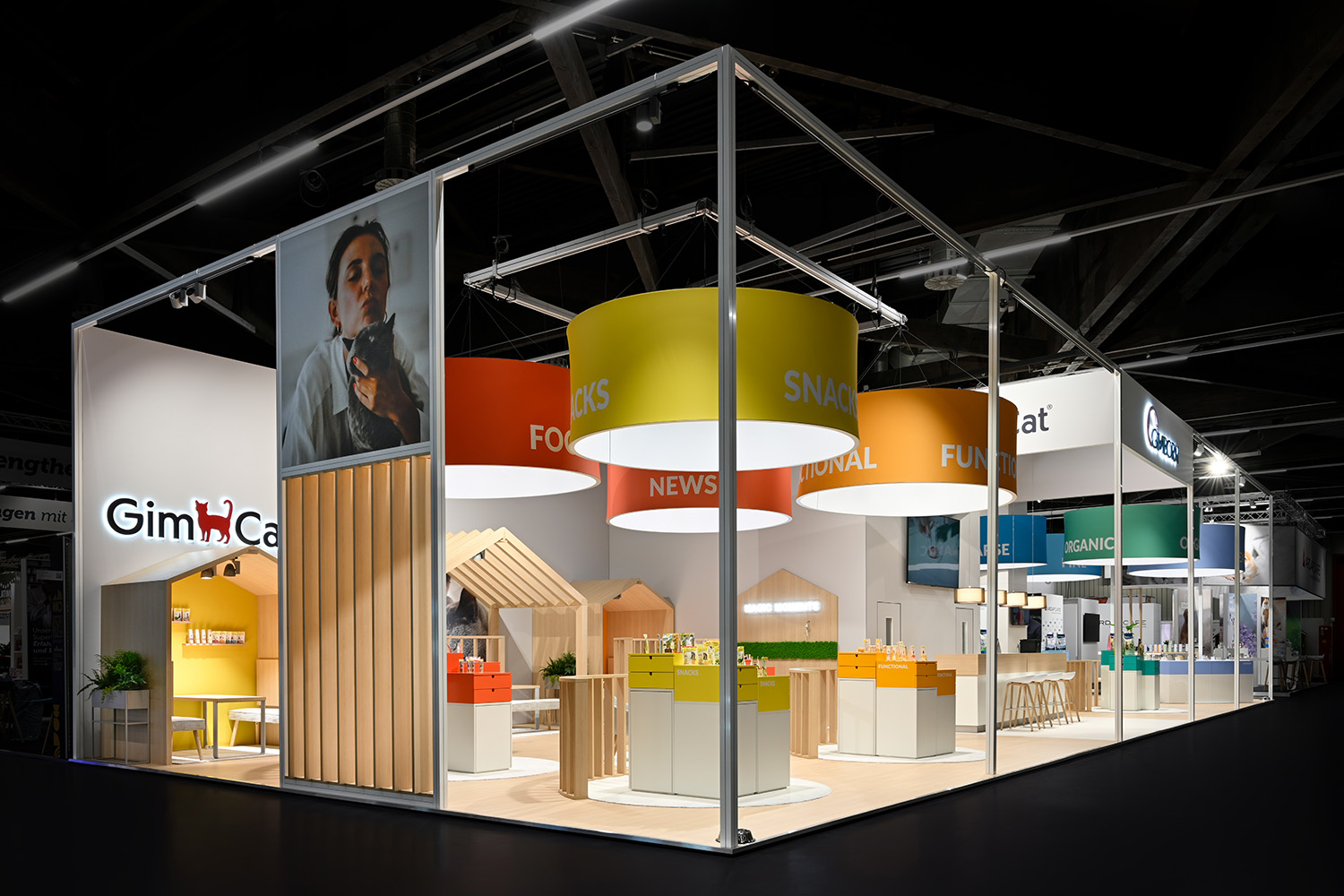
Intelligent technologies transform trade fair stands into smart environments that optimize themselves and provide valuable data. Sensors detect visitor flows and help to avoid bottlenecks. They measure where visitors are located, which areas are particularly interesting, and where adjustments may be necessary. This data is invaluable for optimizing future trade fair appearances.
Trend #6 | Trend materials & techniques
Sustainable materials
Bamboo grows quickly and is versatile, while cork impresses with its feel and insulating properties. Recycled materials are also gaining in importance and are being transformed into attractive design elements thanks to new processing techniques.
3D printing
3D printing can be used to create individual components and uncommon shapes that would be almost impossible to produce using traditional methods. From complex structures to personalized details, there are virtually no limits to creativity.
Lightweight construction
Aluminum alloys and modern plastics combine low weight with high stability. They facilitate transport and assembly, reduce costs and speed up logistics.
Acoustic materials
In noisy exhibition halls, acoustically effective elements create pleasant conversation zones. Modern panels are not only functional but also enhance the design.
LED technology
Energy-efficient LEDs characterize the lighting design at the exhibition stand. Real-time color changes and precise accents enable atmospheric staging with minimal energy consumption.

Practical tips for implementation
Trends in trade fair construction are best integrated step by step. First, choose an approach that suits your company well and gradually expand your concept. Not every industry benefits from the same solutions: while technology providers can impress with AR and VR, sustainable materials or nature-inspired designs have a particularly strong impact on brands in the natural cosmetics or food sectors. Budget also plays an important role. It is often enough to start with simple measures such as energy-efficient lighting or modular elements. Ultimately, the success of the project depends on the right collaboration with an experienced trade show construction partner who knows the technical possibilities and develops realistic solutions.
Which social developments are changing trade fair construction
Social developments also influence trade fair construction and set new trends. Since the pandemic, health and safety have become central considerations. Open space concepts, contactless technologies and clear hygiene standards have become the norm.
At the same time, the issue of inclusion is becoming increasingly important. Trade fair stands should be accessible to everyone, regardless of physical limitations or cultural background. Visitors also expect brands to present themselves in a diverse and contemporary manner.
It is no longer enough to simply convey information. Modern trade fair presentations create emotional experiences and focus on interactivity, enabling visitors to immerse themselves in the brand world and remember it for a long afterwards.
Conclusion:
For exhibitors, it is particularly worthwhile investing in sustainability, modularity and digital technologies. These trends are already well established, offer clear advantages in terms of budget, flexibility and brand image – and will continue to grow in importance in the coming years.
Personalization and smart technologies are exciting additions that can create additional value, depending on the target group and budget. However, it is crucial to choose your own trend mix carefully, as not every approach is suitable for every company.
Those who make strategic use of these developments can transform their trade fair stand into a future-proof tool that brings brand messages to life and leaves a lasting impression on visitors.
Want to learn more about this topic?
Get in touch!


Contact us
More Interesting Articles
Customer Service

Customer satisfaction in trade fair construction
Exhibition Stand Design
Digital technologies in trade fair construction
Exhibition Stand Design
Efficient budget planning in trade fair construction
Exhibition Stand Design
Tight budget? Here’s how to minimize the costs for your exhibition stand
Sustainability
Sustainability at trade fairs: Renting plants or using artificial plants?
Career
Promoting young talent in trade fair construction
Back to overview